
What is the VeriSeq NIPT Test?
NIPT (Non-Invasive Prenatal Testing) is a screening method that analyzes cell-free fetal DNA (cffDNA) in maternal blood to assess the risk of chromosomal abnormalities.
.
An increasing number of expectant mothers are choosing NIPT due to its superior safety and accuracy in prenatal screening. However, many still overlook testing quality standards, often under the misconception that "NIPT is the same everywhere."
.
In reality, the reliability of NIPT depends strictly on the technology, equipment, reagents, and operational protocols. According to Ministry of Health regulations, only tests that achieve IVD (In Vitro Diagnostics) standards are recognized as qualified for clinical use.
.
This implies that if a facility fails to meet full IVD standards across the entire workflow—from reagents and equipment to analysis software—the NIPT results may:
.
- Lack stability and reproducibility, leading to inconsistent results between different test runs.
- Be prone to errors, as the equipment, reagents, and analysis software have not been fully validated.
- Increase the risk of false positives or false negatives, directly impacting clinical decisions throughout the pregnancy.
- Not be recognized in clinical practice, making it difficult for doctors to rely on the results for subsequent medical indications.
.
Therefore, the IVD standard is not just a "certificate"; it is the decisive factor for the safety and reliability of the NIPT results that mothers receive.
.
In Vietnam, Phacogen is currently the first provider to offer the VeriSeq NIPT solution with CE-IVD certification across the entire workflow, certified by an independent international organization. This is not only a significant milestone for the prenatal screening industry but also elevates testing quality, providing mothers with results of higher accuracy and reliability.
.
What can VeriSeq NIPT do?
VeriSeq NIPT provides early screening for common genetic syndromes, including:
.
1. Down Syndrome (Trisomy 21): Associated with intellectual disability, congenital heart defects, hypotonia (poor muscle tone), speech and motor delays, thyroid risks, digestive issues, and increased susceptibility to infections.
.
2. Edwards Syndrome (Trisomy 18): Associated with severe heart defects, brain abnormalities, characteristic clenched hands, low birth weight, internal organ abnormalities, and a very low survival rate.
.
3. Patau Syndrome (Trisomy 13): Associated with cleft lip and palate, brain malformations, eye and skull abnormalities, heart and limb deformities, and a high neonatal mortality rate.
.
4. Sex Chromosome Aneuploidies (SCAs):
.
- Turner Syndrome (XO): Affects females; characterized by short stature, delayed puberty, infertility, and risks of cardiovascular and thyroid diseases.
- Klinefelter Syndrome (XXY): Affects males; characterized by delayed puberty, hypogonadism (low testosterone), reduced fertility, and learning difficulties.
- Triple X Syndrome (XXX): Affects females; characterized by taller-than-average height and potential mild learning difficulties.
- Jacob’s Syndrome (XYY): Affects males; characterized by taller-than-average height, potential speech delays, and hyperactivity.
.
5. Rare Chromosomal Abnormalities (CNVs ≥ 7Mb): Large microdeletions or duplications; causing intellectual disabilities, behavioral disorders, seizures, and heart-kidney-brain defects. These are often difficult to detect via traditional ultrasound. This test detects large deletions/duplications across all 23 pairs of chromosomes.
.
6. Abnormalities in Twin Pregnancies: Higher risk compared to singleton pregnancies; may involve selective fetal growth restriction, morphological abnormalities, or placental disorders; requires individual assessment for each fetus.
.
How is VeriSeq NIPT different from standard NIPT?
As shared above, VeriSeq NIPT is the first NIPT solution in Vietnam to achieve CE-IVD certification for its entire workflow, validated by an independent European assessment body. This is currently the highest standard for determining the quality and reliability of an NIPT test for clinical application in expectant mothers.
.
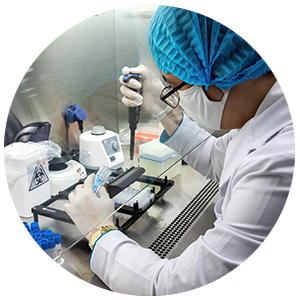
To achieve this standard, a laboratory must not only possess modern equipment but also comprehensively meet a series of stringent requirements, including:
.
✔ Advanced Technology: Imported from the U.S. and officially licensed by the Ministry of Health.
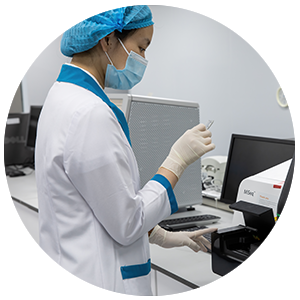
✔ Fully Automated Systems: Minimizing manual errors and eliminating the risk of cross-contamination.
✔ Standardized Protocols: Ensuring a strictly closed-loop and safe process.
✔ International Quality Certification: Equipment and reagents meet CE-IVD standards, ensuring high precision.
✔ Highly Qualified Expert Team: Professionally trained with direct technology transfer from the manufacturer.
.
Meeting this full set of requirements demands a large-scale laboratory, strong financial resources, synchronized technology, and superior quality management capabilities—achievements that not every facility can attain.
.
Therefore, CE-IVD certification for the entire workflow is not just proof of quality; it is a confirmation that the VeriSeq NIPT service at Phacogen reaches levels of safety, accuracy, and reliability equivalent to leading European laboratories. This provides expectant mothers with superior benefits compared to using NIPT packages that do not meet these standards across the entire process.
.
Mothers can refer to the comparison table below to clearly understand the differences in sensitivity and accuracy when using the VeriSeq NIPT prenatal screening service:
| Abnormality Groups | Quality Indicators | Phacogen – VeriSeq NIPT (CE-IVD) (Certified by an independent, professional European body) | Non-IVD compliant providers (Self-declared – lack of full-workflow validation) |
| Common Aneuploidies: T13, T18, T21 | Sensitivity | 99.65% | Unstable, fluctuating between 95% and <99%, depending on the equipment and kits used |
| Specificity | 99.98% | May be lower (98–99%), with a higher risk of false positives | |
| Positive Predictive Value (PPV) | 97.93% | Commonly lower (75–90%) due to a lack of equipment calibration and algorithm validation | |
| Negative Predictive Value (NPV) | 100% | Fluctuating; unable to confirm "100%" reliability due to the absence of independent validation | |
| Sex Chromosome Aneuploidies (SCAs) | Sensitivity | 99.36% | 90–96%, heavily dependent on analytical algorithms |
| Specificity | 99.97% | 97–99%, increasing the risk of inaccurate results | |
| PPV | 90.17% | Significantly lower (50–80%) | |
| NPV | 100% | Cannot be absolutely guaranteed | |
| Rare Autosomal Trisomies (RATs) | Sensitivity | 99.99% | Fluctuates significantly (50–95%); many facilities DO NOT report this metric |
| Specificity | 99.92% | Unstable, with high margins of error when full-process CE-IVD is absent | |
| PPV | 47.38% | Often very low (10–30%), easily causing unnecessary anxiety | |
| NPV | 100% | Not certified by independent organizations | |
| Copy Number Variations (CNVs) >7Mb | Sensitivity | 99.99% | Often very low (10–30%), easily causing unnecessary anxiety |
| Specificity | 99.97% | Unstable, prone to false signals | |
| PPV | 55.56% | Often low (10–25%) → frequently leads to unnecessary follow-up testing | |
| NPV | 100% | Unverifiable | |
| Microdeletions <7Mb | Sensitivity | 83.33% | Low sensitivity; many facilities DO NOT accept small CNV analysis |
| Specificity | 99.99% | Lower, prone to false positives | |
| PPV | 71.43% | Only 20–40% in non-IVD compliant facilities | |
| NPV | 100% | Not guaranteed without CE-IVD validation |
.
Interpretation of VeriSeq NIPT Results
Negative (Low Risk Result)
.
No chromosomal numerical abnormalities were detected within the screening scope.
.
=> The pregnant woman should continue routine prenatal monitoring and follow-up examinations as instructed by her physician.
.
Positive (High Risk Result)
.
Chromosomal abnormality risk detected.
.
=> The pregnant woman requires consultation with a specialist and should consider diagnostic testing (Amniocentesis/Chorionic Villus Sampling - CVS).
.
Note: NIPT is a screening test, not a diagnostic one. Any positive result must be confirmed through invasive diagnostic procedures.
.
Candidates for VeriSeq NIPT (Clinical Indications)
- Pregnant women at 10 weeks of gestation or later – Bio-eligible for cell-free DNA (cfDNA) testing.
.
- Advanced maternal age (35 years or older) – Higher risk of chromosomal abnormalities, particularly Down syndrome.
.
- Abnormal results from ultrasound or traditional screening (Double Test/Triple Test) – NIPT helps re-evaluate the risk before proceeding with invasive procedures.
.
- Personal history of giving birth to a child with genetic disorders or congenital defects.
.
- Family history of hereditary genetic conditions.
.
- IVF pregnancies – Many families seek additional assurance regarding the genetic health of the fetus.
.
- Twin pregnancies – (Applicable for specific NIPT assays; compatibility depends on the laboratory’s protocol).
.
Why Choose VeriSeq NIPT at Phacogen?
- European Standards from Equipment to Protocol: Utilizing the VeriSeq NIPT system—a synchronized, cutting-edge, and internationally certified platform.
.
- Next-Generation Sequencing (NGS) for Superior Accuracy: Analyzing fetal cell-free DNA (cfDNA) in maternal blood via NGS technology to ensure stable and highly reliable results.
.
- Simple Sampling Process: Only 10ml of maternal blood is required, starting from the 10th week of pregnancy.
.
- Rapid Turnaround with Market-Leading Precision: Results delivered within 7 days, strictly adhering to CE-IVD quality control standards.
.
- The Highest Quality Standard Today: The first facility to be certified by an independent European body for a full-process CE-IVD workflow—guaranteeing clinical safety and maximum accuracy.
.
- U.S. Technology Test Kits – Licensed by the Ministry of Health: Fully transparent origins, verified according to international standards.
.
- 100% Automated Operating System: Minimizing manual errors and enhancing reliability to ensure virtually no clinical cases are missed.
.
- Comprehensive Support Policy: Financial assistance for amniocentesis or chorionic villus sampling (CVS) if indicated by a physician.
.
Contact for Consultation For professional advice and service booking, please contact Phacogen: 1900 3200
.
VeriSeq NIPT at Phacogen = Peace of Mind from Standards + Trust in Technology + Precision from CE-IVD Workflow